


Description
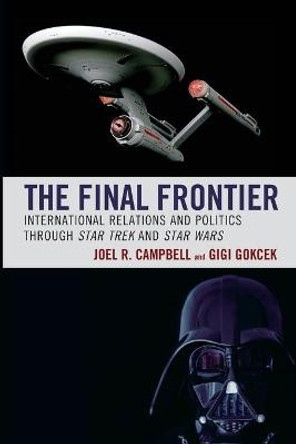
Movies and television series are excellent tools for teaching political science and international relations. Understanding how stories in various film and television genres illustrate political ideas can better assist students and fans understand and appreciate the political subtext of these media products. This book examines politics through five film genres and their variants. Gangster movies focus on American and other organized crime. They reached their zenith in the films of Francis Ford Coppola and Martin Scorsese. Political thrillers express paranoia about secrecy and political conspiracies, while action movies channel anger at foreign and domestic threats to order. Superhero films and TV present modern characters who seek to serve society as they face personal struggles about their individual identities. War movies promote positive images of wars when conflicts are perceived as successful, but often include antiwar messages when wars turn out badly. Western movies fell out of favor in the 1970s and 1980s but have undergone a renaissance since the 1990s. Westerns can be taken as either political parables, or as meditations on policing, anarchy, community organization. The author argues that while these genres all offer escape, they also offer important political lessons.
About the Author
Joel R. Campbell is associate professor of political science in the Pacific Region (Japan and South Korea) in the Global Campus program of Troy University.
Reviews
This is an amazing read. I just couldn't put the book down. I've never seen a text that so captivatingly explains the relationship of film genres to politics and international relations. Campbell weaves political theory, film criticism, and history into an appealing mix, while keeping the reader engaged with the unfolding development of five film types-gangster, thriller and action, superhero, war, and western movies. His application of constructivism makes perfect sense, as it captures the constantly shifting dynamics of filmed presentations of political and IR issues. His discussions of women in each genre illustrate how various marginalized groups often are not adequately represented on-screen. Finally, he briefly walks the reader through several other genres, showing how politics can be found in almost any kind of movie. Movies are like time capsules, indicating how we think about society and politics in any era, and this book is one of the best in helping students and the general public better understand how it all works.
-- Hieyeon Keum, University of SeoulThis is a creative and effective tool to use film to teach international relations.
-- Douglas John Becker, University of Southern CaliforniaBook Information
ISBN 9781793635181
Author Joel R. Campbell
Format Paperback
Page Count 408
Imprint Lexington Books
Publisher Lexington Books
Weight(grams) 635g
Dimensions(mm) 232mm * 160mm * 29mm
Details
Subtitle: |
International Relations and Politics in Genre Films and Television |
Imprint: |
Lexington Books |